Equipment Buying Guide
What to Include in a Food Processing Machinery RFQ
A useful inquiry describes the production job before it asks for a model or price. This guide turns your product, capacity, factory and commercial requirements into a quotation that suppliers can answer and buyers can compare.
Direct Answer
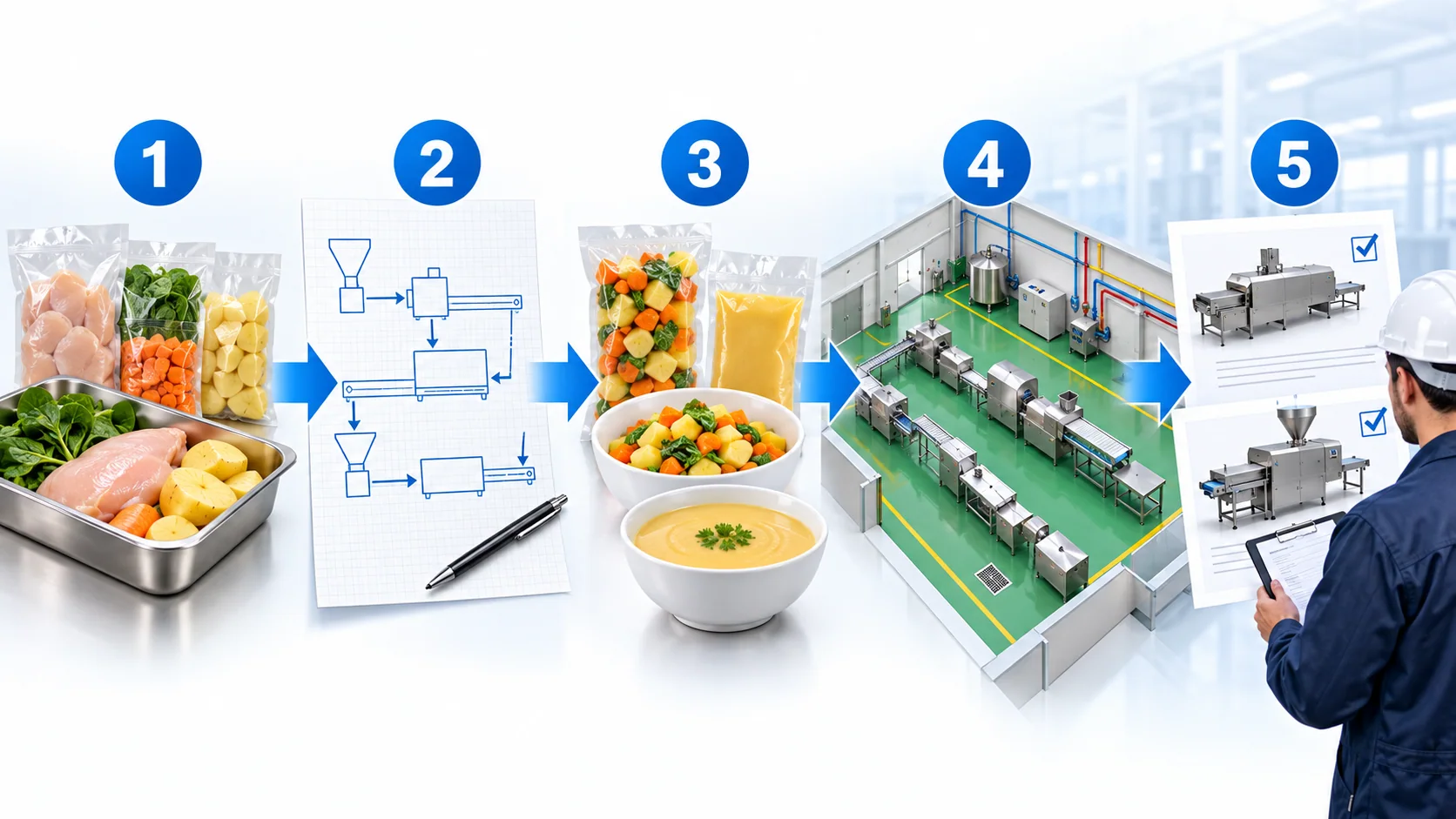
For a useful quotation, send the incoming material, required finished product, capacity basis, package or portion format, available utilities, installation space, upstream and downstream interfaces, destination and requested supply scope. Add representative photos, a simple process flow and the acceptance evidence you expect. A model name alone rarely gives enough information for a responsible equipment selection.
Begin with the production job, not a machine name
Two buyers may request the same “cutter,” “fryer” or “filling machine” while expecting very different results. One may process chilled meat into a coarse filling; another may handle a warm emulsion. One may need a stand-alone machine; another must connect to an existing conveyor. State the operational problem, the point in the process where the equipment will work and what should leave that step.
If you already have a process flow, mark the proposed equipment position. If not, list the steps from receiving to packing. This gives the supplier enough context to question missing transfer, holding, inspection or cleaning stages instead of pricing an isolated machine that cannot fit the complete workflow.
Describe the incoming material as it really arrives
Name the food material and its condition at the machine inlet. Useful facts include whether it is fresh, chilled, frozen, cooked, peeled, bone-in, viscous, fragile, particulate or mixed with liquid. Give the normal size range, temperature range and any preparation completed upstream. Photos beside a ruler or a short representative video often communicate more than a broad product name.
Do not hide variation. Seasonal produce, different cuts, changing formulations and inconsistent package shapes may affect feeding, cutting, mixing, pumping or thermal performance. Identify the usual condition and the credible extremes that the proposed equipment must accommodate.
Define the finished product and quality target
State the output form buyers or the next process require: cut dimensions, particle appearance, filling format, coating condition, surface moisture, texture or other observable quality. A reference sample, photograph or approved retail product can help, but explain which attributes matter. “Same as the picture” is not a measurable acceptance criterion.
Separate mandatory requirements from preferences. This allows a supplier to protect the essential result while proposing alternatives for secondary features. If the product will be cooked, frozen, filled or packed immediately afterward, explain that next step because it can influence discharge height, transfer method and product handling.
Give a capacity basis that can be compared
State whether the target is kilograms per hour, pieces per minute, batches per shift or finished packs per day. Include operating hours, batch size where relevant, planned changeovers and whether the figure refers to input or saleable output. A single daily total without shift length or product basis can produce incomparable proposals.
Ask the supplier to state the assumptions behind quoted capacity. Capacity can depend on feed consistency, cut size, recipe, dwell time, loading pattern, operator practice and cleaning stops. A responsible quotation should identify important dependencies instead of presenting one number as universal performance.
Record utilities and site conditions early
List available electrical supply, frequency and phase, plus steam, water, compressed air, gas, drainage and ventilation where relevant. State which utilities are available at the proposed machine location and which must be created. Destination country alone does not fully define a factory’s actual supply.
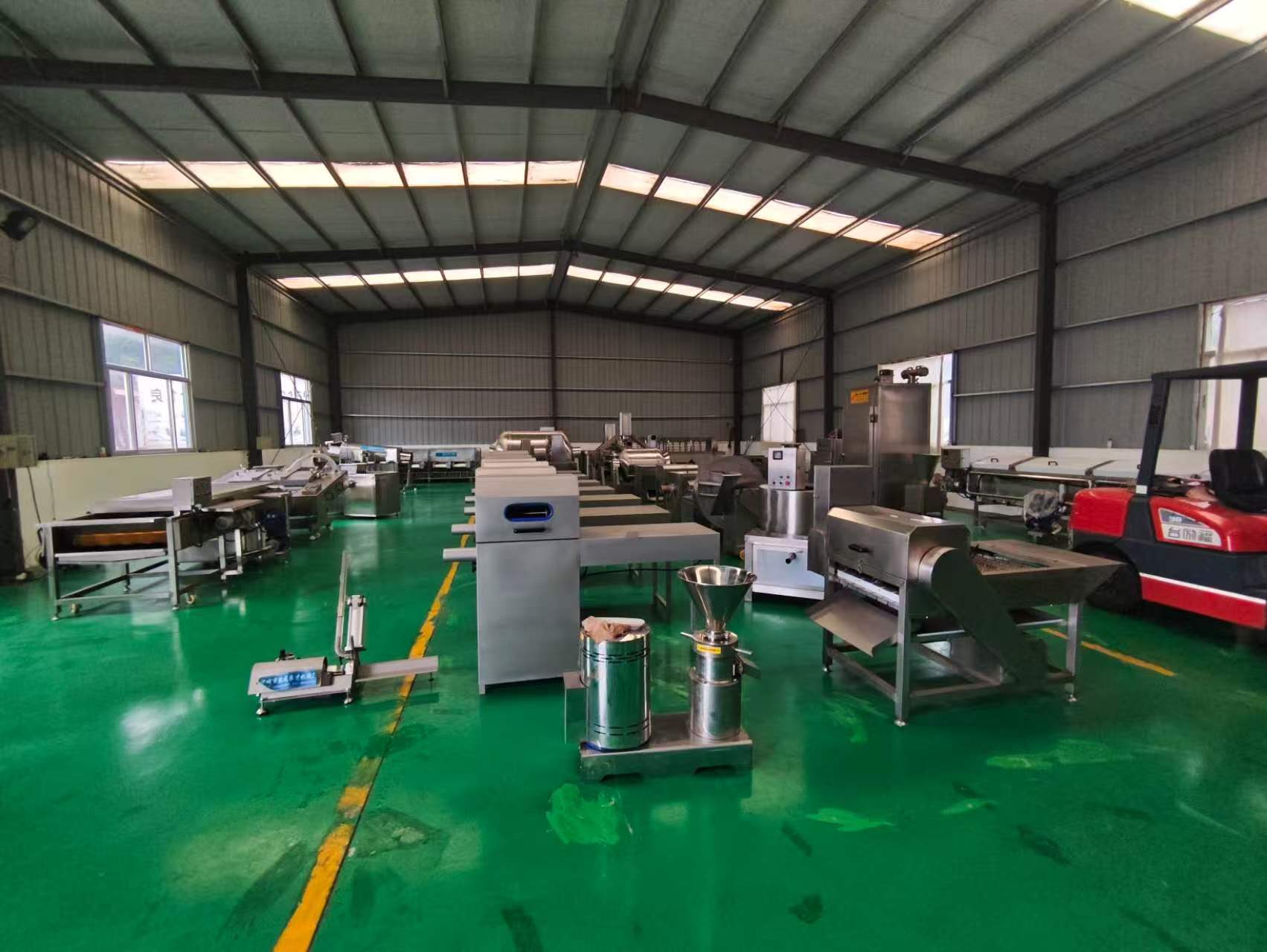
Provide installation-area length, width and clear height, door dimensions, floor loading concerns, access route and nearby columns or drains. Mark preferred operator and maintenance access. A simple annotated layout can prevent a machine from being quoted with the wrong orientation, service side or transfer height.
Explain hygiene, cleaning and material expectations
Tell the supplier how the plant intends to clean the equipment, which food-contact materials are required and whether cleaning is manual, foam-based, washdown or integrated into a larger sanitation routine. Identify allergens, frequent recipe changes or areas where product retention would be unacceptable.
Do not use a broad phrase such as “food grade” as the only requirement. Ask the quotation to identify product-contact materials, surface treatment, removable parts, access for inspection and any cleaning system included. Regulatory and customer requirements differ by market and product, so requirements should be confirmed for the actual project.
Map the upstream and downstream interfaces
For every connection, give the existing or planned machine, transfer height, available footprint, product flow direction and preferred control relationship. State whether the new equipment must receive product continuously or in batches, and whether downstream equipment can stop or accumulate product.
Interface details often determine conveyors, pumps, hoppers, buffering, sensors and control signals. They also define who is responsible for mechanical connection, electrical integration and commissioning. Put these boundaries into the RFQ so competing proposals do not include different scopes under similar total prices.
Separate base scope, options and buyer-supplied items
Request a clear list of what the quotation includes: main machine, feeding and discharge equipment, electrical cabinet, guards, change parts, tools, spare parts, manuals, drawings, packing, installation support and shipment coordination. Ask optional items to be priced separately where possible.
Also name buyer-supplied utilities, foundations, lifting equipment, interconnecting pipework or local labor when applicable. A low headline price may simply omit work included elsewhere. Comparable scope is more useful than comparing totals without inclusion and exclusion lists.
Agree on evidence before accepting performance
Where practical, define the material test, inspection or factory acceptance evidence expected before shipment. Specify who provides test product, the quantity available, the observable result, how capacity will be recorded and what limitations apply to a factory trial. A water run or no-load check cannot prove every product-performance claim.
For complex lines, acceptance may be divided between supplier-site checks and commissioning at the buyer’s factory. Record which checks can be completed before shipment and which depend on final utilities, operators, packaging or product conditions.
Use a quotation comparison table
The table below turns broad inquiries into fields that several suppliers can answer on the same basis. Leave unknown items marked for discussion rather than guessing.
| RFQ field | What the buyer should send | What the supplier should clarify |
|---|---|---|
| Process objective | Current step, problem and desired change | Proposed process position and boundaries |
| Material | Type, condition, size, temperature and variation | Feed assumptions and suitability limits |
| Finished output | Format, quality attributes and next step | Expected result and adjustable variables |
| Capacity | Unit, input/output basis, shifts and batches | Rated basis and operating assumptions |
| Site and utilities | Supply, layout, access and environment | Consumption, connections and service clearance |
| Commercial scope | Documents, spares, packing and support | Inclusions, exclusions, options and responsibilities |
Copy-ready inquiry checklist
Before sending the RFQ, check that it contains: company and destination; raw material and sample media; finished product; process flow; capacity basis; package or portion format; utilities; layout and access; upstream and downstream interfaces; hygiene expectations; requested documents; inspection or test expectations; spare-parts request; delivery preference; and the people responsible for technical and commercial decisions.
A complete first inquiry does not need to answer every engineering question. Its purpose is to make unknowns visible, reduce assumptions and start a focused exchange.
Organize clarification questions without losing control of scope
After suppliers respond, keep one clarification register rather than answering similar questions in separate chats. Group questions under process, mechanical, electrical, hygiene, layout, testing, documentation, packing and commercial terms. Record the buyer answer, supplier response, decision owner and the document that was updated. This prevents a useful engineering detail from becoming an informal promise that never reaches the final quotation.
When a supplier proposes an alternative, ask what requirement it changes, which benefit it offers and what new dependency it creates. A different feeding method may reduce manual handling but require more floor space. A larger buffer may stabilize the line but change cleaning and product-hold time. A simpler control arrangement may reduce cost but place more responsibility on operators. The RFQ process is valuable when these trade-offs remain visible.
Before selecting a proposal, issue a final clarification summary and ask the supplier to confirm that the revised quotation incorporates it. Review drawings, equipment lists and exclusion notes together. If an item remains undecided, mark it as an option or open point with a deadline. This discipline makes the commercial comparison more reliable and gives the later inspection team a clear baseline.
A clearer RFQ shortens the path to a useful proposal
The best RFQ is not the longest document. It is the one that makes the production target, boundaries and unknowns easy to see. Suppliers can then explain trade-offs, buyers can compare equivalent scope and both sides can reserve detailed engineering for the configuration that fits the project.
Frequently Asked Questions
What information is most important in a food processing machinery RFQ?
Start with the incoming material, finished product, capacity basis, utilities, installation space and the equipment immediately before and after the proposed machine.
Should I request a model and price before sharing product details?
You can request a budget indication, but a responsible configuration normally requires product and process details. Model-only quotations may rely on assumptions that do not match your factory.
How should production capacity be stated?
Use a clear unit and say whether it refers to input or finished output. Add batch size, shift length, operating hours and important changeovers where relevant.
Do photos and videos help with equipment selection?
Yes. Representative material, finished-product and workshop media can clarify condition, size, handling and interfaces. They should supplement, not replace, written requirements.
What should be included in a machinery quotation?
Ask for included equipment, options, product-contact materials, utilities, documents, spare parts, packing, support, exclusions and the assumptions behind performance.
Can LACA review an existing production-line layout?
Yes. Send a simple layout, machine positions, flow direction, transfer heights and available utilities. LACA can use them to begin a process and equipment discussion.
Continue Your Research
Tell LACA about your project
Share your material, required output, capacity, destination and any project details available. LACA will use them to begin a focused equipment discussion.