Equipment Buying Guide
Meat Bone Separator Price: 10 Factors Buyers Should Compare
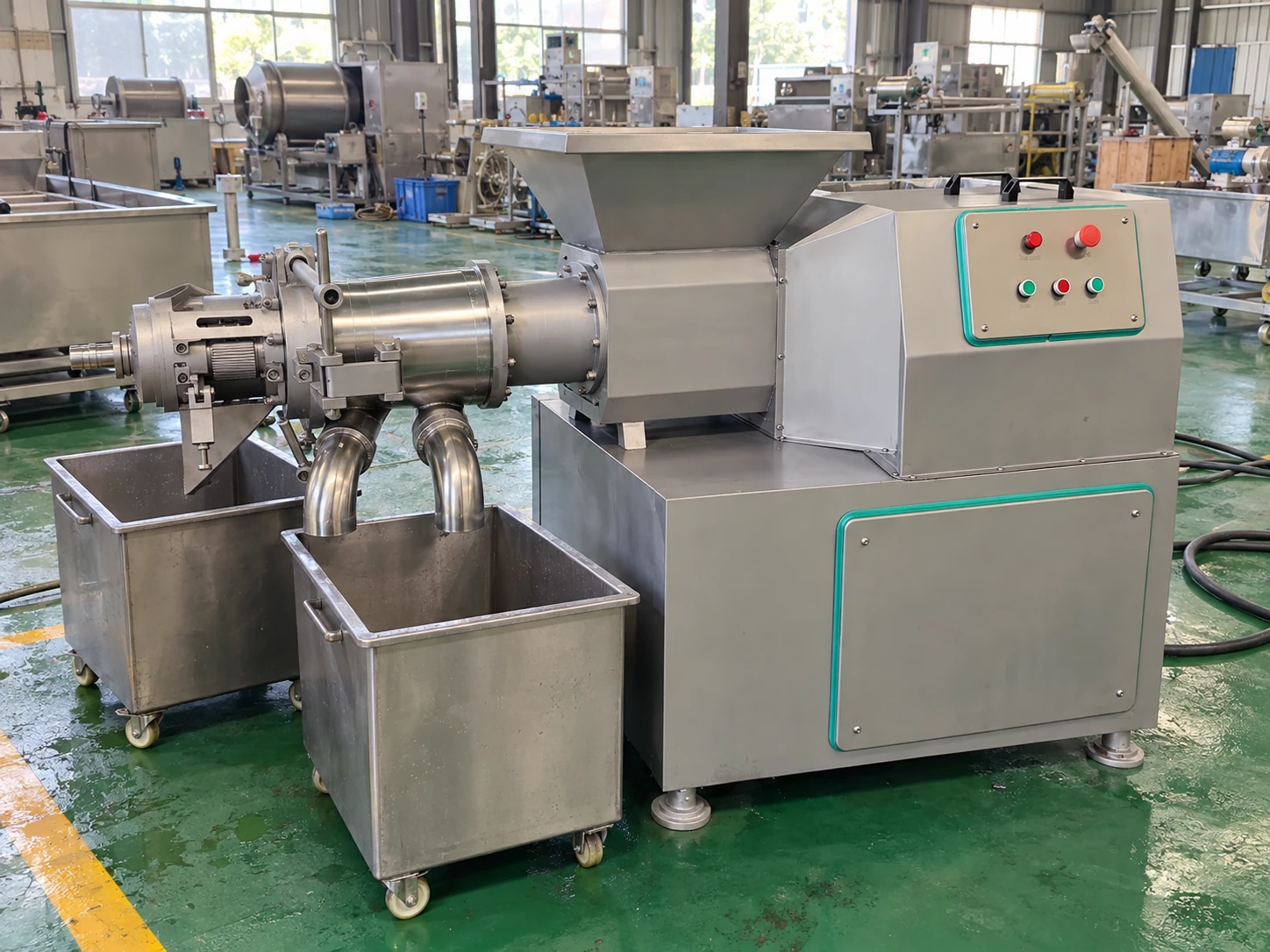
A useful price comparison begins with the process duty, not a model name. Raw material, target product, capacity, screen and pressure configuration, cleaning, wear parts, line integration and delivery scope can change both the machine and the total project cost.
Direct Answer
There is no responsible universal meat bone separator price. The quotation depends on the raw material and its temperature, required throughput, target meat texture and quality, screen and pressure configuration, feed preparation, utilities, controls, cleaning design, wear parts, installation, service and delivery terms. Send every supplier the same RFQ and representative trial material, then compare the included scope and acceptance evidence rather than the equipment price alone.
Start with the total project scope, not a sticker price
A buyer searching for a meat bone separator price often receives numbers that appear comparable but describe different projects. One quotation may cover only the separator body. Another may include a feed conveyor, pre-breaker, collection bins, control cabinet, spare screen, commissioning and export packing. The lower number can become the more expensive project after missing items are added.
Define a common supply boundary before comparing suppliers. State whether the price must include feed preparation, metal detection, platform, discharge handling, electrical cabinet, cables, washdown accessories, spare and wear parts, manuals, factory testing, installation supervision, training, freight and destination charges. Ask suppliers to separate standard supply, required options and optional future items.
The purchase decision should also include operating impact. Labor for feeding and cleaning, expected wear, product loss during changeover, water use, downtime for service and the availability of critical parts can outweigh a small difference in the initial equipment price.
Factor 1: Raw material determines the separation duty
A machine selected for chilled poultry frames is not automatically the right choice for pork back bones, necks, rib trim, spent hens or mixed pet-food raw material. Bone hardness, meat attachment, piece size, skin and fat content, prior cutting and the presence of foreign material all affect feeding, pressure demand, screen loading and wear.
Describe the incoming material by species and anatomical part rather than writing only poultry or pork. Include photographs, typical and maximum piece dimensions, whether material is fresh, chilled or partially frozen, the temperature range at loading, daily variability and the condition after upstream deboning. If several raw materials will share the machine, list the expected percentage and production schedule for each.
Raw material ambiguity raises quotation risk. A supplier may size conservatively, exclude difficult materials or propose extra preparation equipment. Representative samples allow the supplier to identify the correct machine family and make the commercial scope more specific.
Factor 2: Capacity changes the frame, drive and feeding system
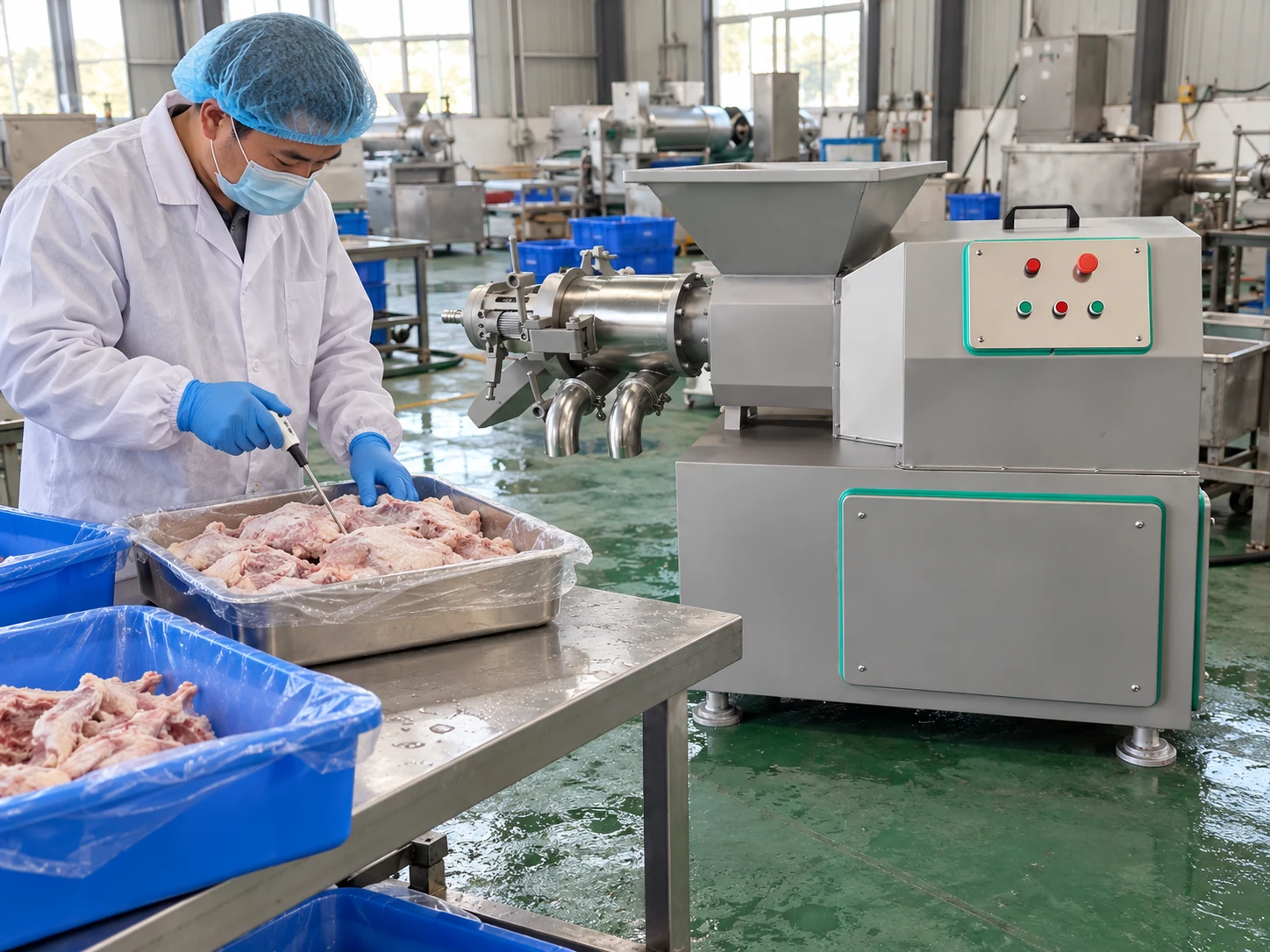
Required throughput is more than a kilograms-per-hour number. State whether the target is instantaneous feed rate, acceptable finished-meat output, average hourly production or total kilograms per shift. Include planned operating hours, cleaning windows, breaks, changeovers and the percentage of time the separator is expected to run steadily.
LACA's current catalog table presents several separator sizes with reference processing bands. Those bands are a starting point, not a guarantee for every material. Actual throughput depends on how easily the raw material feeds, the separation setting, the screen condition and the product-quality limit accepted by the buyer.
Higher duty can require a larger hopper, stronger drive, different feeding arrangement, heavier structure, larger electrical load and more capable upstream and downstream handling. Buying excess nameplate capacity can also be inefficient if the factory cannot feed, collect or chill product at the same rate.
Factor 3: The target product sets screen and pressure requirements
Meat bone separation is not defined by recovery alone. Buyers may need a fine mechanically separated product for emulsified foods, a coarser structured output, or a material intended for a regulated pet-food process. Screen opening, geometry, screw or pressure setting and residence time influence texture, visible particles, temperature rise and the condition of the residue stream.
Manufacturers describe different separator, deboner, desinewer, belt and press technologies because the required output can be materially different. Do not assume that machines with similar photographs produce interchangeable material. Define the intended downstream product and the measurements used by your quality team.
Ask which screens and pressure parts are included, which are optional and how long changeover takes. A quotation for one standard screen is not equivalent to a package that supports several validated products.
Factor 4: Recovery must be balanced against product quality
A high recovery claim is incomplete without the conditions and the quality result. Increasing pressure or changing the restriction may recover more soft tissue, but it can also change texture, temperature, calcium or bone-particle indicators, color and the amount of hard material carried into the product. The acceptable balance depends on the raw material, finished use and applicable rules.
Request a mass balance from a representative run: weighed incoming material, recovered meat, discharged residue, retained product and any loss. Record the run duration and whether start-up and shutdown material are included. Review the residue as carefully as the meat stream because wet residue can indicate a different operating point than dry residue.
Do not compare a supplier's best short demonstration with another supplier's sustained production run. Use the same material batch, temperature range, test duration, measurement method and acceptance limits wherever practical.
Factor 5: Feed preparation and line integration add equipment
Some raw materials can enter the separator directly; others need size reduction, controlled thawing, trimming or a feed conveyor. An industrial frozen meat grinder is a different machine and should not be treated as the separator itself. If preparation is required, define the allowed piece size and verify that upstream cutting does not create an unsafe or unsuitable feed condition.
Downstream scope also matters. Recovered product may need a pump, closed transfer, weighing, totes, chilling or immediate delivery to mixing, grinding, emulsifying or forming. Bone residue may need a separate conveyor, bin, crusher or rendering route. Layout height, outlet orientation and cleaning access can determine whether standard accessories fit.
Ask for a line drawing that shows the product path, operators, platforms, collection points, floor drains and service clearances. Integration items that are absent from the drawing are likely to reappear later as change orders.
Factor 6: A controlled trial is part of the commercial decision
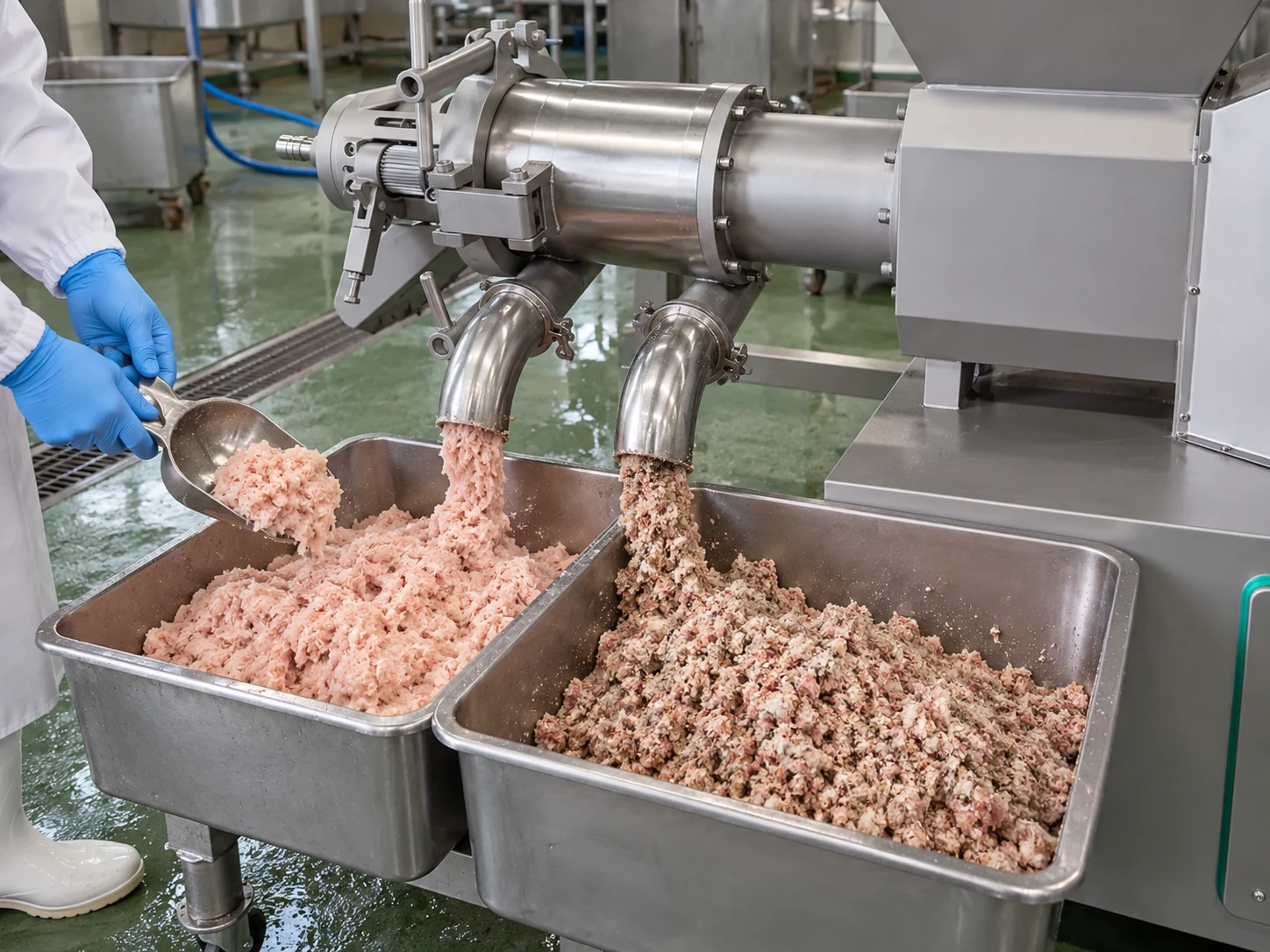
A trial reduces uncertainty before the final price is approved. Send enough normal production material to cover start-up, stable running and shutdown. Record species, anatomical part, preparation method, storage time and temperature. Agree in advance which screen, restriction and operating settings may be changed during the test.
Measure both output streams. Useful observations include feed stability, average throughput, recoverable yield under the agreed calculation, product temperature before and after separation, visual texture, residue condition, stoppages, retained material and cleaning time. Laboratory tests should follow the buyer's product specification and target-market requirements.
Photographs and samples are helpful, but they do not replace a signed test record. The final quotation should identify the tested configuration and clearly mark any difference between the demonstration machine and the machine offered.
Factor 7: Utilities and controls affect the installed cost
Confirm destination voltage, frequency, phase, available power, control voltage and whether a transformer or local electrical components are required. Ask for installed power and the proposed starting method. The line may also require compressed air, process water, hot water or a defined drain arrangement even if the separator drive itself is electric.
Control scope can range from local push buttons to a cabinet that interlocks conveyors, sensors and downstream equipment. Emergency stops, guards, overload protection and safe isolation must match the machine and the destination's requirements. Do not assume a logo or certificate on a brochure proves that the final project satisfies local law.
Request an electrical drawing, utility list and interface description with the quotation. These documents help the factory estimate cable runs, breakers, installation labor and commissioning work before purchase.
Factor 8: Cleaning design changes labor and production time
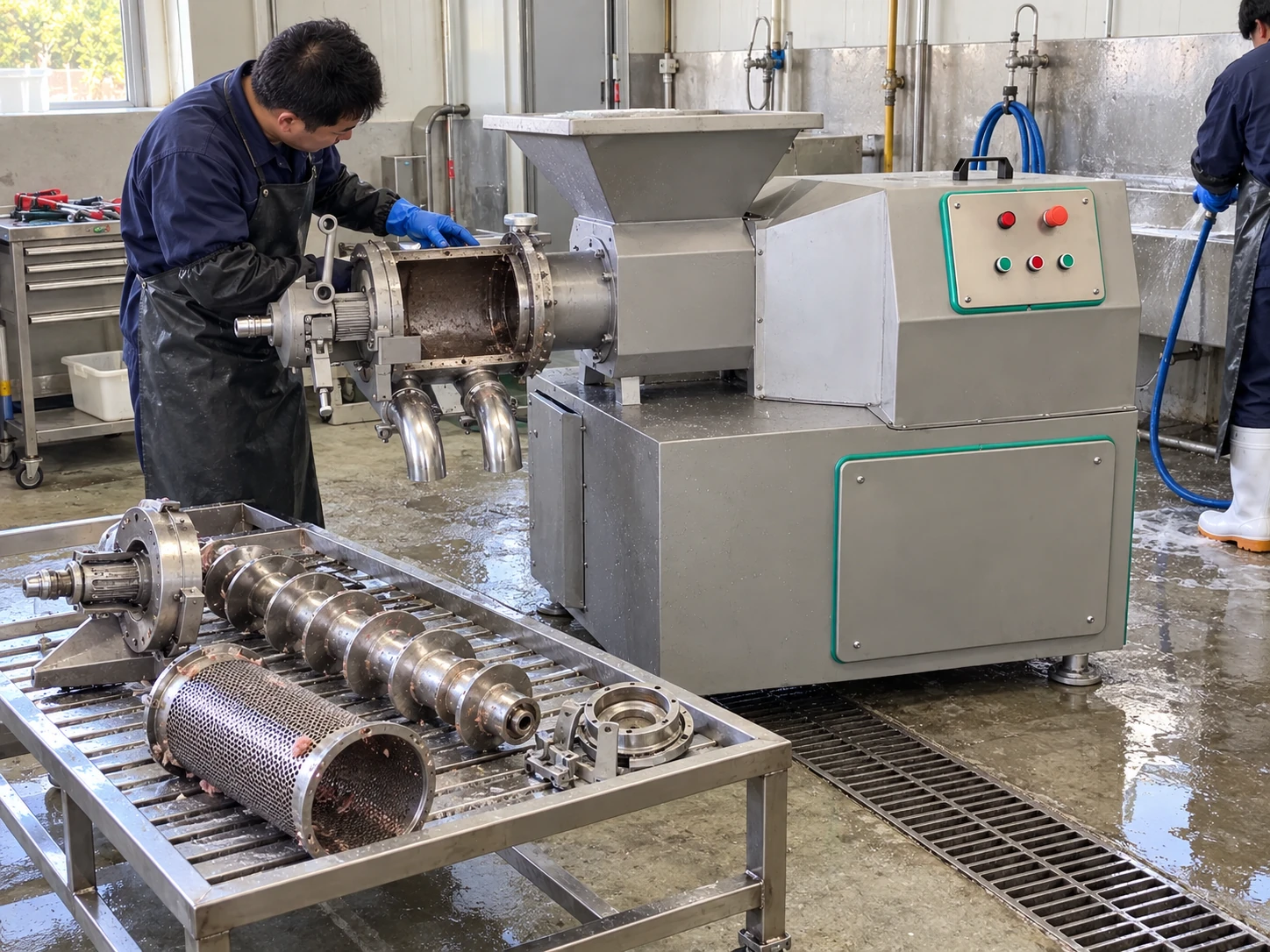
Food-contact parts must be removed, inspected, cleaned and reassembled according to the machine instructions and the factory sanitation program. The commercial impact depends on component weight, access, lifting needs, tool requirements, retained product, drainage and the time required to verify cleanliness before restart.
Ask the supplier to demonstrate a complete end-of-run cleaning sequence rather than showing only polished external surfaces. Time shutdown, disassembly, gross soil removal, washing, inspection, reassembly and the first safe restart. Identify parts that cannot be sprayed directly and controls that need protection.
A lower purchase price can be misleading if every changeover requires more operators or long downtime. Include cleaning labor and lost production time in the comparison, especially for factories running several species or formulations.
Factor 9: Wear parts and service determine lifetime cost
Screens, screws, restriction components, seals, bearings and other high-load surfaces can wear at rates that depend on bone hardness, contamination, setting, operating hours and cleaning practice. A supplier cannot responsibly promise one universal service life without material and duty conditions.
Request a recommended start-up spare-parts list and a separate two-year operating list based on the proposed schedule. Ask for unit prices, normal lead times, storage recommendations and the tools needed for replacement. Clarify whether screens can be repaired, whether wear can be adjusted and how the factory should measure a reject condition.
Service capability belongs in the price evaluation. Remote troubleshooting, English manuals, wiring diagrams, parts identification, commissioning support and response time may be more valuable than a small discount on the machine body.
Factor 10: Delivery, installation and acceptance complete the quote
International quotations should state the Incoterm, export packing, package dimensions and weight, shipment point, estimated production period and document set. Freight, insurance, duties, inland handling and local unloading may sit outside the supplier's price, so buyers should not compare EXW and delivered offers as if they were equal.
Installation scope should identify foundations, positioning, lifting, electrical and piping work, consumables, travel costs, accommodation and the division of labor between supplier and buyer. If remote commissioning is proposed, confirm what cameras, instruments, product and staff must be available on site.
Finish with a factory acceptance test and a site acceptance plan. Each criterion needs a method, condition, tolerance, record and responsible party. The acceptance document should reference the same raw material and product objectives used to select the machine.
Compare quotations on one scope sheet
Normalize each offer before ranking price. Enter the same units and currency, separate included and excluded items, and mark claims that still depend on a trial. If a supplier cannot answer a field, record it as open rather than assuming that it is included.
The table below is a practical starting point. Add project-specific requirements for local compliance, product testing, plant automation and destination service.
| Comparison item | What to specify | Evidence to request |
|---|---|---|
| Process duty | Species, bone type, piece size, temperature and schedule | Approved material list and trial record |
| Output target | Throughput basis, texture, quality limits and downstream use | Mass balance, samples and test conditions |
| Machine configuration | Model, drive, hopper, screen, settings and controls | Technical offer and configuration drawing |
| Line scope | Feed preparation, conveyors, bins, pumps and platforms | Layout with interfaces and exclusions |
| Operating cost | Labor, cleaning time, utilities and wear parts | Cleaning demonstration and spare-parts quotation |
| Delivery and service | Incoterm, packing, documents, commissioning and warranty | Commercial schedule and responsibility matrix |
Build a useful RFQ for a meat bone separator
Start the RFQ with the incoming material and desired finished use. Add photographs, approximate composition, temperature, piece dimensions, daily volume, required hours and any seasonal variation. State whether samples can be shipped or tested at the supplier's facility.
Then define the required evidence: capacity under stated conditions, mass balance, product and residue samples, temperature change, quality tests, cleaning demonstration, noise or utility information where relevant, and the proposed acceptance criteria. List destination voltage, factory layout, discharge height, preferred automation and the required delivery term.
Ask for one base offer and a clearly priced option list. This structure makes it easier to remove nonessential items without losing critical process components, and it prevents suppliers from hiding exclusions inside a single total.
Keep food-law and product responsibility in the project brief
Mechanically separated or recovered meat is regulated differently across markets, species and production methods. USDA FSIS materials, for example, distinguish mechanically separated products and advanced meat recovery, while EU sources apply their own production, hygiene and labeling framework. A machine purchase does not determine the legal name or permitted use of the output.
Before ordering, the processor should confirm permitted source materials, product category, labeling, testing, hygiene controls and finished-product use with the competent authority and qualified specialists in the destination market. Share those limits with the equipment supplier so the trial and configuration can be discussed against the correct objective.
This article provides purchasing guidance, not a regulatory approval. The factory remains responsible for its validated process, food-safety system, product specification and market compliance.
Use the LACA product page as the technical starting point
The LACA meat bone separator page shows the current machine family, catalog configuration and reference capacity bands. Use it to identify a preliminary size, then send the actual raw material, target output and project scope for confirmation. Do not select a model from throughput alone.
If the project also requires size reduction, review the industrial frozen meat grinder separately and define the interface between the two machines. Buyers planning a broader line can explore LACA meat processing machinery before preparing one coordinated equipment list.
Send LACA the RFQ, layout and sample information through the contact page. A useful quotation will repeat the agreed material, configuration, included scope, trial assumptions and open items so commercial comparison remains traceable.
The best price is the lowest verified cost for the required result
A low meat bone separator price is valuable only when the machine can process the real material, produce the required output, fit the factory, be cleaned within the schedule and receive parts and service when needed. A higher initial quote may be more economical if it includes the correct screen set, feed handling, testing, commissioning and critical spares.
Make the decision in sequence: define material, output and legal boundary; establish the capacity basis; agree the trial method; compare machine and line scope; calculate cleaning and wear impact; normalize delivery terms; and attach measurable acceptance criteria. This process turns an uncertain price search into a controlled procurement decision.
The final purchase order should contain the technical offer, layout, responsibility matrix, test record, spare-parts list and commercial terms. Those documents protect both buyer and supplier from assumptions that a single model name or headline price cannot carry.
Frequently Asked Questions
How much does an industrial meat bone separator cost?
There is no reliable universal figure. Price changes with raw material, capacity, screen and pressure configuration, feed and discharge equipment, controls, cleaning design, spares, service, packing and delivery terms. Request a project-specific quotation.
Why are two meat bone separator quotations so different?
They may cover different machine sizes, screens, accessories, automation, testing, spares, commissioning or delivery terms. Normalize the included scope and exclusions before comparing totals.
Should I choose a meat bone separator by kilograms per hour?
No. Capacity is necessary, but the rating must be tied to your material, temperature, preparation, settings and product-quality limit. Also confirm whether the number means feed rate or recovered output.
Does a higher recovery rate always mean a better machine?
No. Recovery must be evaluated with texture, temperature, residue condition and the quality or regulatory limits for the intended product. Compare both outlet streams under the same trial conditions.
What samples should I send for a separator trial?
Send representative production material covering normal variation, with species, anatomical part, preparation, storage time and temperature recorded. Supply enough for start-up, stable running and shutdown observations.
What information does LACA need for a meat bone separator quote?
Send raw-material photos and details, temperature, piece size, target throughput and output, working schedule, utilities, layout, downstream use, destination, delivery term and sample availability.
Continue Your Research
Tell LACA about your project
Share your material, required output, capacity, destination and any project details available. LACA will use them to begin a focused equipment discussion.