Fruit and Vegetable Washing Machine
The YM-QP series combines bottom air agitation, adjustable conveying and pumped spray rinsing. Four lengths cover reference capacities from 500 to 1500 kg/h for compatible produce.
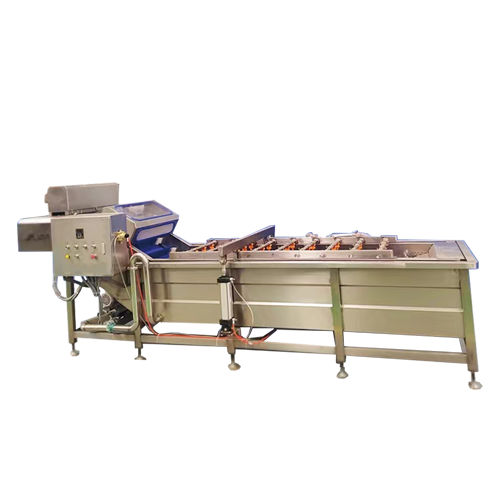
Equipment Overview
The YM-QP series combines bottom air agitation, adjustable conveying and pumped spray rinsing. Four lengths cover reference capacities from 500 to 1500 kg/h for compatible produce. A fruit and vegetable washing machine should be selected from the product and process, not from appearance or nominal output alone. This page explains what determines cleaned produce ready for the next preparation stage, how the equipment connects from trimming or cutting depending on the process route to dewatering, inspection, cutting, chilling or packaging, and which details an overseas buyer should confirm before quotation. Technical figures come from the supplied product material and remain subject to the approved configuration.
Typical Applications
- Leafy vegetables and herbs
- Whole or cut fruit
- Root vegetables after soil removal
- Aquatic or other products validated for water washing
Where the Fruit and Vegetable Washing Machine fits in an industrial line
The YM-QP series combines bottom air agitation, adjustable conveying and pumped spray rinsing. Four lengths cover reference capacities from 500 to 1500 kg/h for compatible produce. The fruit and vegetable washing machine is used when a processor needs to turn whole or cut vegetables, fruit, herbs and leafy products suited to water washing into cleaned produce ready for the next preparation stage. It should be selected as one production stage, not as an isolated stainless-steel machine. The commercial discussion therefore starts with what enters the equipment, what must leave it, and whether the upstream and downstream stages can support the same production rhythm.
Raw-material conditions for the Fruit and Vegetable Washing Machine
The relevant material window includes whole or cut vegetables, fruit, herbs and leafy products suited to water washing. Temperature, dimensions, moisture, viscosity, bone or fiber content, surface condition and batch consistency may change equipment behavior. A serious selection should use representative photos, dimensions and, where practical, a material trial instead of assuming that two products with similar names will process identically.
Define the Fruit and Vegetable Washing Machine finished-product target
The intended result is cleaned produce ready for the next preparation stage. Buyers should state the required shape, texture, particle size, coating pickup, moisture, package or other measurable endpoint. This definition prevents a high nominal capacity from being chosen at the expense of product quality or compatibility with the next stage.
How the Fruit and Vegetable Washing Machine processing step works
In this application, the equipment combines controlled water movement, air agitation, spray rinsing and conveying according to product needs. The exact mechanism and installed accessories must match the real product. Operating settings are part of a complete process and should be established during commissioning; they are not universal recipes that can be copied between factories.
Configuration decisions for this fruit and vegetable washing machine
Product flotation, fragility, soil load, water temperature, residence time, filtration, make-up water and discharge dewatering must be defined together. The principal selection factors are soil load, product fragility, flotation behavior, water management, residence time and discharge method. These inputs affect machine size, control scope, cleaning access and the achievable line rhythm. The approved quotation should list the included working parts and utilities clearly so that optional equipment is not mistaken for standard supply.
Capacity planning for the Fruit and Vegetable Washing Machine
Nominal capacity is useful only when it is interpreted with the actual product and shift plan. Loading, preparation, dwell or cycle time, discharge, cleaning and operator movement can all reduce effective output. Compare the required hourly average and peak demand with the complete route from trimming or cutting depending on the process route to dewatering, inspection, cutting, chilling or packaging.
Fruit and Vegetable Washing Machine upstream preparation: trimming or cutting depending on the process route
Stable feeding begins with trimming or cutting depending on the process route. Define who prepares the material, how it is transferred, and how nonconforming items are removed. Connection height, container size, conveyor direction and buffering should be visible on a simple layout before fabrication.
Fruit and Vegetable Washing Machine downstream connection: dewatering, inspection, cutting, chilling or packaging
After this step, the planned route is dewatering, inspection, cutting, chilling or packaging. Confirm discharge height, product collection, temperature control, waiting time and whether automatic transfer is required. Designing both interfaces together normally provides a more practical factory flow than buying each machine independently.
Cleaning and changeover access on the Fruit and Vegetable Washing Machine
Cleaning requirements depend on the product and local food-safety plan. Review food-contact access, removable working parts, drain points, residue traps and the space needed for inspection. The site must define the cleaning chemistry, frequency and verification method; stainless-steel appearance alone does not prove hygienic performance.
Safety responsibilities for Fruit and Vegetable Washing Machine operation
Guards, interlocks, emergency stops, heat or pressure protection and safe access must match the final machine configuration. Operators should be trained on the supplied manual and the factory's lockout, sanitation and food-safety procedures. Thermal and shelf-stable products require a separately validated product process.
Utilities and export preparation for the Fruit and Vegetable Washing Machine
Send the destination voltage and frequency together with available water, steam, gas, compressed air, cooling, vacuum, ventilation and drainage information as applicable. Confirm door sizes, floor loading, service clearance and material flow. Export packing, installation scope and spare parts should be agreed before shipment.
Information required for a precise Fruit and Vegetable Washing Machine quotation
Provide representative material and finished-product photos, target capacity, working hours, required endpoint, present process, utility conditions, destination country and workshop layout. These details allow the team to compare the supplied catalog reference with the actual project and identify any test or engineering confirmation still required.
How to read the updated Fruit and Vegetable Washing Machine parameter table
The model table below is a procurement reference transcribed from the newly supplied product material. A listed capacity describes the source test or catalog condition, not every raw material. Read each number together with the table note, then ask the quotation to repeat the selected model, working parts, electrical supply, usable dimensions and included options. If a source cell was unclear, this page marks it for confirmation instead of filling the gap with an assumed value.
Material trial and acceptance for the Fruit and Vegetable Washing Machine
A useful trial starts with a representative production sample, not a specially prepared demonstration material. Record incoming temperature, dimensions, moisture or viscosity, batch weight and the operator settings used. Evaluate the finished product against agreed measures such as cut geometry, separation texture, coating pickup, wash result, moisture, seal integrity or cooking endpoint as applicable. The acceptance record should also cover throughput over a meaningful run, product loss, changeover time, cleaning access and any visible damage to the food.
Compare Fruit and Vegetable Washing Machine quotations on the same scope
Two quotations are comparable only when they describe the same process duty. Put the selected model, food-contact construction, working width or volume, motor and heating load, controls, safety devices, spare and wear parts, packing, documentation, commissioning and installation responsibility on one checklist. Also separate machine capacity from complete-line output. LACA can review the material, target result, factory utilities and connection points with the buyer, while final technical commitments remain those written in the approved quotation and acceptance documents.
Questions Industrial Buyers Ask
What can the Fruit and Vegetable Washing Machine process?
It is intended for whole or cut vegetables, fruit, herbs and leafy products suited to water washing. Final suitability should be confirmed with the actual material, temperature and required result.
What result should I specify before ordering?
Specify cleaned produce ready for the next preparation stage, including any measurable size, texture, moisture, package, portion or process endpoint that matters to your buyer.
How is the correct capacity selected?
Use the real line flow, batch or cycle time, working hours and the capacity of both trimming or cutting depending on the process route and dewatering, inspection, cutting, chilling or packaging; do not select from the largest catalog number alone.
Which configuration details affect this machine?
Important points include soil load, product fragility, flotation behavior, water management, residence time and discharge method. The final quotation should state what is included and what remains optional.
Can this equipment connect to an existing line?
Yes, subject to layout review. Share connection heights, material-flow direction, containers, utilities, available floor space and control expectations.
What information is needed for a fruit and vegetable washing machine quotation?
Send material photos, target output, finished-product requirements, utilities, destination country and a workshop sketch. Product tests may be requested when processing behavior is uncertain.